
Crawl space encapsulation in Knoxville costs $4,000–$14,000 for the complete sealed system. Vented crawls in East Tennessee run above 70% relative humidity all summer — the threshold where wood feeds rot and attracts termites — while a healthy crawl holds 45–55%. Sealing and drying is what brings it down.
The upstairs symptoms, why this valley's air and clay conspire, and what the sealed fix includes tier by tier.
The house reports the crawl
Nobody visits their own crawl space; the living room files the reports instead:
- A musty smell that peaks in July — crawl air rising through the floor, carrying its biology along
- Bouncy or soft floors — framing losing its argument with years above the line
- Hardwoods cupping over the dampest bays
- Allergies that ease when you leave the house — the crawl is the air supply
- Termite mud tubes on block — moisture's most expensive fans have found the buffet
- An AC that never quite wins against indoor humidity
Two or more usually means the crawl. The inspection is free and photographed — you see everything we see before anyone mentions money.
Why the 70% line rules East Tennessee
This valley's summer air arrives pre-loaded with moisture, and a vented crawl invites it under the house to condense on framing the AC has cooled. Beneath, red clay holds every rain against footings for days and exhales ground vapor upward. Between ridge runoff and valley humidity, a vented Knoxville crawl parks above 70% RH for whole seasons — and above that line, wood absorbs enough moisture to feed decay fungi and lure the region's heavy subterranean termite pressure. Venting was supposed to dry crawls; in this climate it's the delivery system.
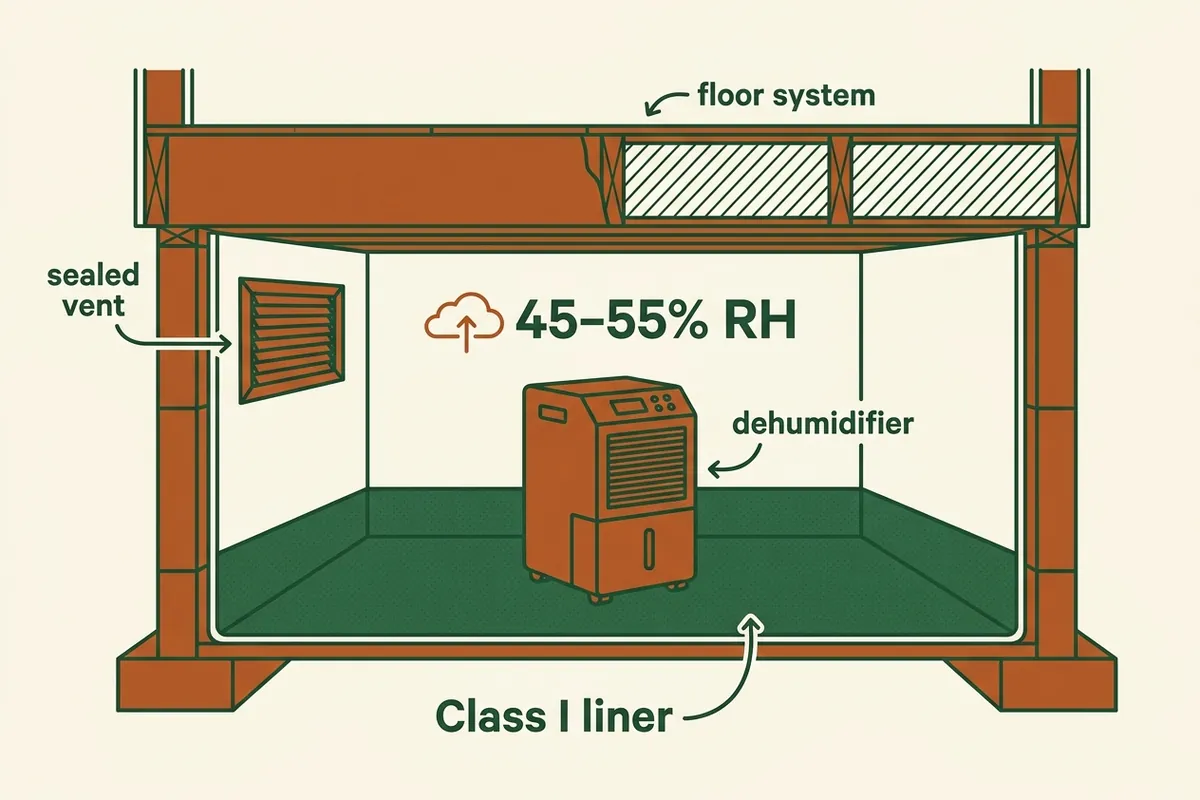
The fix inverts the design: close the vents, seal ground and walls with a Class I barrier, dry the air mechanically — exactly the unvented design Tennessee's adoption of IRC R408.3 recognizes. Water gets managed first, damaged wood gets repaired, and the number drops under 55 and stays.
The fix, tier by tier
| Scope | What it includes | Typical range |
|---|---|---|
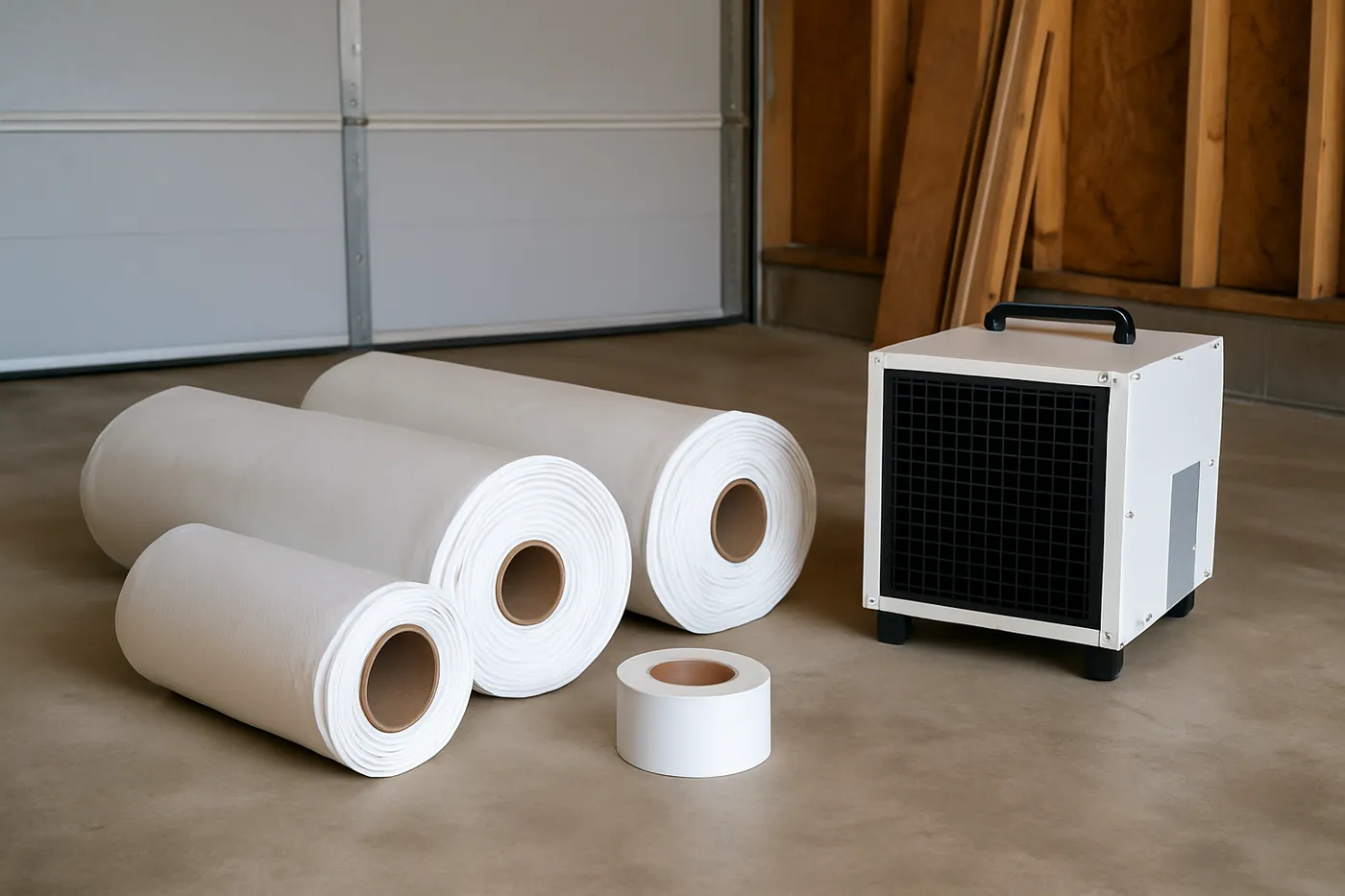
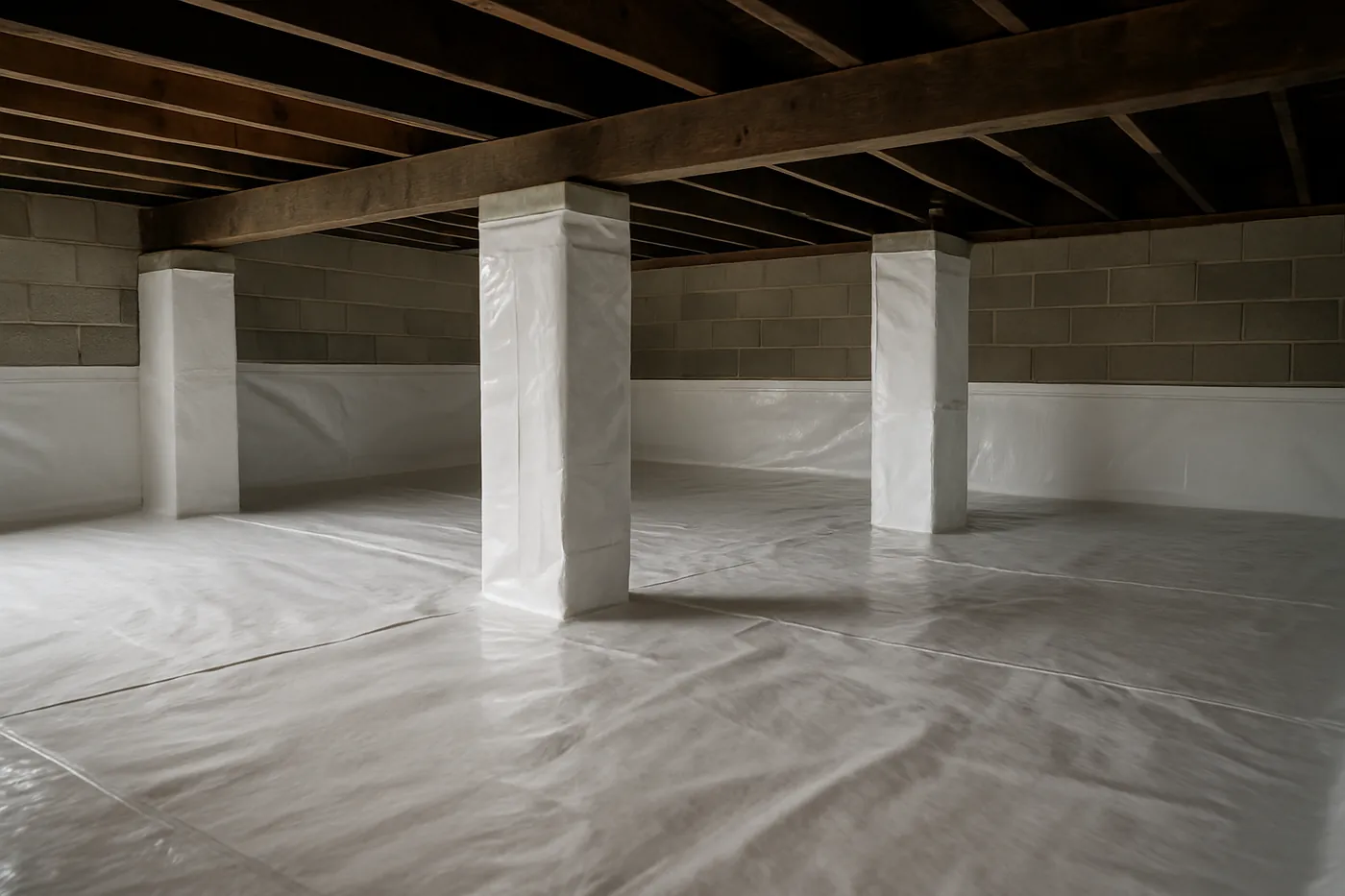
| Vapor barrier | Ground-sealed Class I liner, seams and piers wrapped | $1,500–$4,000 |
| Water management | Interior drainage, sump, discharge routing | $2,000–$5,000 |
| Full encapsulation | Seal + dry: liner, closed vents, sized dehumidifier | $4,000–$14,000 |
| Structural repair | Sistered joists, jacks, beams for softened framing | Added per scope |
Mold on framing gets treated before sealing, and every quote follows the photographed inspection — humidity readings included, so the before-and-after is numbers, not vibes.
What sealing changes upstairs
The musty smell fades within days as the crawl dries. Summer comfort improves — much of a house's first-floor air rises from below, and dry air costs less to cool. Floors firm up once repaired framing stops absorbing. And the termite conversation changes permanently: sealed-dry crawls are the opposite of what they hunt. Commissioning readings document the new number, and the system keeps it there through every August this valley can offer.
One job gets its own deep page: what separates a real crawl space vapor barrier installation from a loose liner — and why a sealed-dry crawl is less interesting to East Tennessee’s termites.
Crawl space questions Knoxville homeowners ask
How much does crawl space encapsulation cost in Knoxville?
Full encapsulation runs $4,000 to $14,000 in East Tennessee, set by square footage, water management needs, and repairs found at inspection. Vapor barriers alone run less; sagging-floor structural work adds lines. Every number follows a free photographed inspection under your actual house. Our Crawl space encapsulation cost breakdown for Knoxville shows what drives each figure, line by line.
Why do Knoxville crawl spaces stay so humid?
Vented crawls here spend the whole summer above 70% relative humidity — the line where wood absorbs enough moisture to feed rot and attract termites. East Tennessee's humid air, red clay that holds every rain against footings, and ridge-and-valley drainage all feed the number. A healthy crawl holds 45-55%; vented Knoxville crawls simply can't.
Is termite pressure really worse in East Tennessee?
It's heavy — subterranean termites thrive exactly where moisture meets wood, and a vented crawl above the 70% line is a standing invitation. Sealing and drying a crawl removes the conditions they hunt for. We repair moisture and wood damage; active infestations get referred to licensed pest control, then we fix what they found.
What does red clay do to a crawl space?
It holds water like a grudge — East Tennessee's red clay drains slowly and keeps rain parked against foundations for days, feeding ground vapor up into the crawl and seepage through block walls. That's why our sequence starts with water management before any liner unrolls.
Are sealed crawl spaces allowed under Tennessee code?
Yes — the IRC's R408.3 unvented crawl space provisions, as adopted in Tennessee, explicitly permit sealed crawls with a Class I vapor barrier and mechanical drying. Sealed-and-dried is the code-recognized design, not a workaround.
My floors bounce and my house smells musty. Same problem?
Usually the same crawl: humid air softens and rots framing (the bounce) while rising crawl air carries the smell upstairs (the must). Sagging floors get structural repair; the smell gets the seal-and-dry. Fixing one without the other leaves half the problem billing you later.
How long does encapsulation take?
Vapor barriers a day; drainage one to two; full encapsulation two to four days; jobs with structural repairs run longer. The written scope states your timeline, and the house stays livable throughout.
Do you serve beyond Knox County?
The valley corridor: Farragut to Lenoir City, Powell and Halls to Clinton and Oak Ridge, Seymour and Maryville toward the foothills. Each community's page describes its own ground.
Crawl space work across the metro
Clinton · Farragut · Halls · Karns · Lenoir City · Maryville · Oak Ridge · Powell · Seymour · all service areas
Get a free Knoxville crawl space inspection
Tell us what you're noticing — smells, humidity, floor bounce, a wet crawl — and we'll schedule an inspection with photos of what we find. We reply the same business day.